

If one of your fellow shareholders died or became seriously ill, what would happen to their shares in the business?
Their family could inherit the shares, while the remaining shareholders may not have the funds available to buy them. This can create uncertainty over who owns and controls the company at an already difficult time.
Shareholder Protection Insurance can provide the funds needed to help the remaining shareholders purchase those shares, while helping the outgoing shareholder or their family receive fair value for their interest in the business.
For company directors and business owners, it can form an important part of protecting the future ownership and stability of the company.

What Happens to Your Shares If You Die?
When a shareholder dies, their shares do not automatically pass to the other shareholders. What happens will depend on the company’s Articles of Association, any Shareholders’ Agreement and the deceased shareholder’s Will.
In some circumstances, the shares could pass to a spouse, children or other beneficiaries.
This can create several potential problems:
❌ The remaining shareholders may lose some control of the business
❌ The beneficiaries may inherit shares in a company they don’t understand or want to be involved with
❌ The surviving shareholders may want to buy the shares but not have sufficient funds available
❌ Disagreement may arise over how much the shares are worth
Having an appropriate shareholder protection arrangement in place can help provide a planned solution before these problems arise.

What Happens If the Remaining Shareholders Can’t Afford to Buy the Shares?
Imagine two directors each own 50% of a successful limited company valued at £800,000.
Each director’s shareholding is therefore worth approximately £400,000.
If one director dies, the surviving director may want to purchase the deceased director’s shares — but finding £400,000 at short notice could be extremely difficult.
With appropriately structured shareholder protection in place, the insurance proceeds could provide the funds needed to help purchase the shares from the deceased shareholder’s estate.
The surviving director can retain control of the company, while the deceased shareholder’s family can receive financial value for the shares rather than being left with an interest in a business they may not want to own.
 What Is Shareholder Protection Insurance?
 What Is Shareholder Protection Insurance?
Shareholder Protection Insurance is designed to provide funds following the death, and potentially the diagnosis of a specified critical illness, of a shareholder.
It is normally arranged alongside an appropriate legal agreement setting out how the shares may be bought and sold.
The aim is simple:
For the remaining shareholders: access to funds to help purchase the shares and retain control of the business.
For the shareholder or their family: the opportunity to receive financial value for their shareholding.
The precise arrangement will depend on the ownership structure of the company and the needs of its shareholders.

What Is a Cross-Option Agreement?
A Cross-Option Agreement is a legal agreement commonly used alongside Shareholder Protection Insurance.
It can give the remaining shareholders the option to purchase the shares following the death of a shareholder, while giving the deceased shareholder’s estate the option to require the remaining shareholders to buy them.
This can help provide clarity for everyone involved:
✔ Who has the right to buy the shares
✔ Who has the right to sell the shares
✔ How the purchase may be funded
✔ How ownership of the business can be transferred
The insurance and legal agreement therefore work together — the protection can provide the money, while the agreement provides the mechanism for dealing with the shares.
Appropriate legal advice should be obtained when putting a Cross-Option Agreement in place.

Shareholder Protection: Tax Considerations
The tax treatment of Shareholder Protection Insurance can depend on how the arrangement is structured, who pays the premiums, who receives the benefits and the purpose of the protection.
There may also be tax considerations surrounding the transfer of shares and the shareholder’s estate.
Tax legislation can change and individual circumstances differ. I would therefore recommend that the company’s accountant or tax adviser confirms the tax implications alongside any protection recommendation.
Where appropriate, legal advice should also be obtained regarding the Shareholders’ Agreement, Cross-Option Agreement, trusts and ownership of the shares.
How Much Shareholder Protection Do You Need?
 How Much Shareholder Protection Do You Need?
The amount of Shareholder Protection required will usually be linked to the value of each person’s shareholding in the company.
For example, if a business is valued at £1 million and two shareholders each own 50%, the starting point may be to consider protection of approximately £500,000 for each shareholder.
However, business valuations can be more complicated than this.
Factors may include:
✔ Company profitability
✔ Assets and liabilities
✔ Retained profits
✔ Recurring revenue
✔ Future growth prospects
✔ The percentage of shares owned
✔ Any existing Shareholders’ Agreement
This is why establishing an appropriate business valuation is an important part of arranging Shareholder Protection.
Can Shareholder Protection Include Critical Illness Cover?
 Can Shareholder Protection Include Critical Illness Cover?
Yes. Shareholder Protection can potentially be arranged to include Critical Illness Cover as well as life cover.
This can be important because the financial consequences for a company may arise not only when a shareholder dies, but also when serious illness means they can no longer continue working in or managing the business.
Shareholder Protection in Practice
 Shareholder Protection in Practice
Consider a company owned equally by three directors.
The business has grown successfully over many years and is now worth £1.5 million. Each director’s 33.3% shareholding is therefore worth approximately £500,000.
One director unexpectedly dies.
Without appropriate planning, their shares could pass into their estate. The other two directors may want to purchase those shares, but raising £500,000 from company resources, personal savings or commercial borrowing could place considerable pressure on the business.
With appropriately arranged Shareholder Protection, funds could be available to help the surviving shareholders purchase the deceased director’s shares.
The result is a much clearer succession plan for both the business owners and their families.
Shareholder Protection vs Key Person Insurance
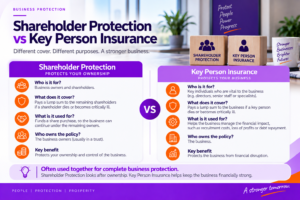 Shareholder Protection vs Key Person Insurance
These two types of business protection are often confused, but they solve different problems.
👥 Shareholder Protection
Primarily designed to provide funds to help facilitate the purchase of a shareholder’s shares following death or, where included, a specified critical illness.
It protects the ownership structure of the business and helps provide value to the affected shareholder or their family.
🏢 Key Person Insurance
Designed to help protect the company itself against the financial impact of losing an important person.
The benefit could potentially help the business deal with lost profits, recruitment costs, disruption or other financial consequences.
It protects the business against the financial loss of a key individual.
Some company directors may therefore benefit from considering both types of protection.

Relevant Life Cover could be worth considering if you:
✔️ Run your own limited company
✔️ Are a company director
✔️ Want to protect your family financially
✔️ Currently pay for life insurance personally
✔️ Want your company to fund your life cover
✔️ Are looking for a potentially tax-efficient protection solution
✔️ Want additional life cover outside your existing employee benefits
The right solution will depend on your personal circumstances, business structure and protection requirements.
Why Specialist Protection Advice Matters
 Why Specialist Protection Advice Matters
Shareholder Protection isn’t simply about choosing an insurance provider and arranging a level of cover.
The ownership of the company, value of the shares, number of shareholders, existing agreements and individual circumstances all need to be considered.
As part of my advice process, I can help you consider:
✔ How much protection may be required
✔ Which shareholders need protecting
✔ Life and Critical Illness Cover options
✔ How the protection may be structured
✔ Existing business protection already in place
✔ Affordability and available providers
✔ The need to involve your accountant and solicitor
I work with company directors on a one-to-one basis, helping make what can initially seem like a complicated area of business protection much easier to understand.
Frequently Asked Questions About Shareholder Protection
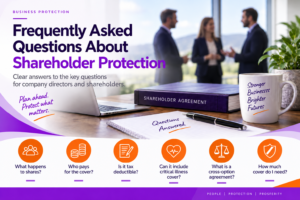 Frequently Asked Questions About Shareholder Protection
What happens to shares when a shareholder dies?
Shares will normally form part of the deceased shareholder’s estate and their eventual ownership will depend on factors including the company’s Articles of Association, any Shareholders’ Agreement and the shareholder’s Will.
Who pays for Shareholder Protection Insurance?
This depends on how the protection arrangement is structured. Different approaches may be appropriate depending on the company and its shareholders.
Is Shareholder Protection Insurance tax deductible?
The tax treatment depends on how the arrangement is structured and its purpose. Your accountant or tax adviser should confirm the tax position for your company.
What is a Cross-Option Agreement?
A Cross-Option Agreement can give surviving shareholders and the deceased shareholder’s estate options to buy or sell the shares following a shareholder’s death. Legal advice should be obtained when establishing the agreement.
Can Shareholder Protection include Critical Illness Cover?
Yes, depending on the insurer and arrangement selected, Critical Illness Cover may be included so that funds could potentially become available following diagnosis of a specified critical illness.
What’s the difference between Shareholder Protection and Key Person Insurance?
Shareholder Protection is primarily designed to help deal with ownership of shares following the death or serious illness of a shareholder. Key Person Insurance is designed to protect the company against the financial impact of losing an important person.
 Not Sure How Much Shareholder Protection Your Business Needs?